
Recycling For Sustainable Interiors
2014-02-27
Articles
Some ideas that are part of the Green Interiors wrongly called Sustainable Interiors is that recycled materials, locally sourced materials and green materials such FSC certified timber ought to be used for construction.
When the idea of green materials was first put into LEED, every major furniture manufacturer came out with their version of green materials and without changing anything normally available furniture became ‘green’. They claimed that steel and aluminium used in their furniture had some recycled content and was recyclable. The same was true for the plastic shells that they used. The paint used was low VOC and hence green. Later they also promised to take the furniture back at the end of its useful life for recycling. While this may sound good it is far from what is possible.
Opus Indigo was started with the idea of producing sustainable interiors with sustainable products. The ideas that is used for one its clients KLG Systel Ltd. were:
- Design interiors with efficient space use, lighting and climate control
- Use sustainable materials for the first time production
- Re-use materials and furniture elements as many times as possible in new interiors
Most clients want a fresh new look to their office when they move to a new place. All of them like to save on cost if possible. These two issues enabled Opus to offer KLG sustainable interiors that looked fresh and saved cost.
The first of these interiors was designed for Unitech Business Park. The building had an existing air conditioning system and large glass walls. It was designed as an open office where everyone sat in the open. Godd daylighting was ensured for all areas including conference rooms that were designed as glass tanks. General lighting was minimized and artificial lighting was integrated with the workstations resulting in a low power density. Workstations were designed ergonomically with split work surfaces. Graphics were used extensively to create a special identity for the office.
The office interior was successful in the sense that the company grew and decided to move a larger office. The workstations were redesigned with a different look while the overall identity of company’s office remained intact. Materials other than furniture from the first office were re-used and new materials were added as required.
After 5 years of using the office, the company decided to move to a smaller office and once again all furniture and materials were re-used in creating the new interior. The material recycling industry is well established in India. The ‘Kabariwala’ will buy almost anything and resell it to resellers and recyclers. This process involves an energy expense and materials are usually ‘down cycled’. The re-use strategy of Opus Indigo results in ‘up cycling’ of materials, a far more sustainable process. The furniture manufacturers that talk about taking their products back at the end of their useful life do not offer the possibility of re-fubishing their products so that they could be re-used and up cycled.
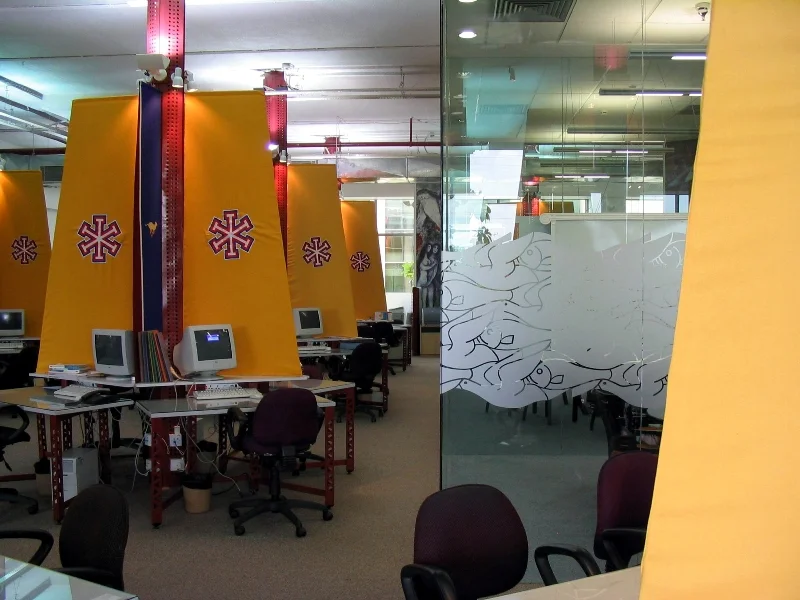 Workstations of First Office
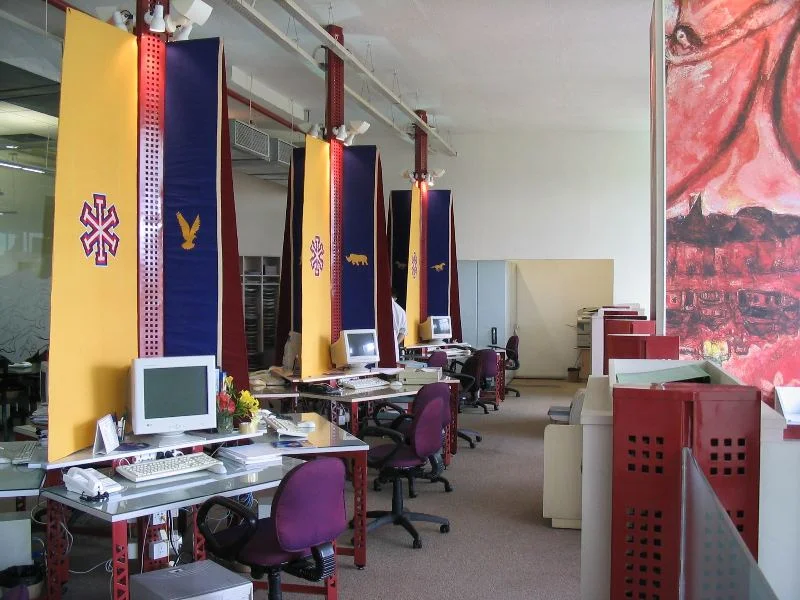 Fish tank conference room of First Office
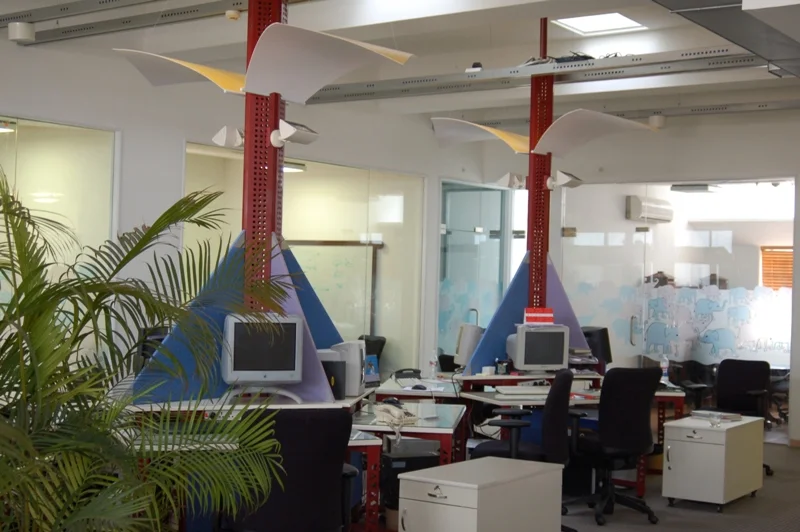 The second interior with re-use of materials and furniture
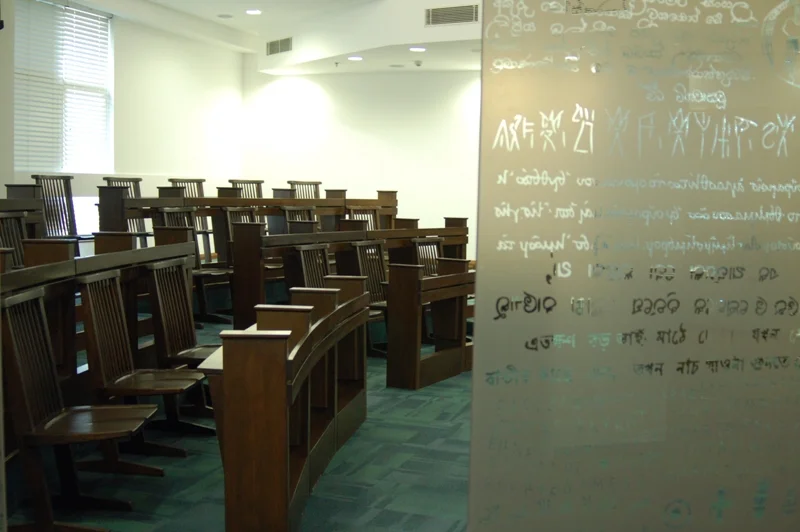 New conference room of the second office
Workstations of First Office
Fish tank conference room of First Office
The second interior with re-use of materials and furniture
New conference room of the second office