
POUSADA TAUMA, GOA
2014-03-07
Architecture
Architect:
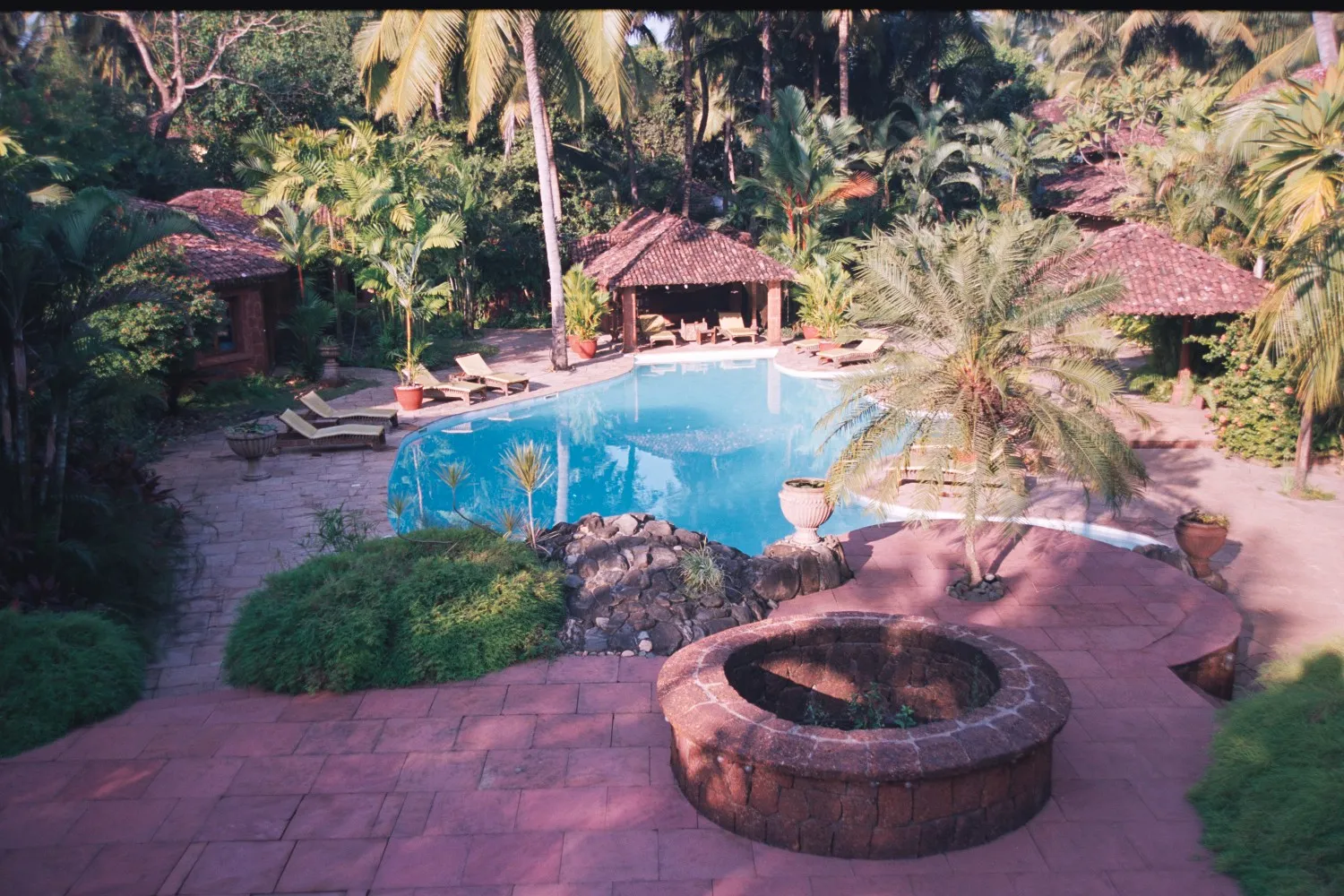
POUSADA TAUMA which in Portuguese means “The resting place”, is a 13 room theme resort built around a central pool. The site, originally is an odd shaped coconut grove of approximately 7,750 sq.m. bounded by a dense village on all sides. It has a proper road access on one end and a service access at the other. The original site being flat needed to be articulated and areas defined by the creation of levels, planting buffers, intermediate pavillions and paving changes. It is a 1.5 km. From the infamous Calangute beach and being in this village, needed to buffer itself from the over development of this area and look inwards.
One enters the resort first through a stone archway with a palm leaf gate and then through a colonaded structure which houses an entrance pavillion, shop, gymnasium and an ayurvedic centre. From here on one moves into the open central space which holds the pool, a pool bar pavillion, a pool entry pavillion and an elevated pool deck and waterfall. This central area also feeds the various other resort rooms and facility pavillions like the restaurant, garden pavillion, etc.. This large space leaves one with the impression that the site is larger than it actually is.
The rooms are mainly divided into three themes, Sea, Field and Hills, since the whole complex is insulated from the outside, one has tried to capture these aspects of Goa which are characterized by these three distinct areas of natural beauty.
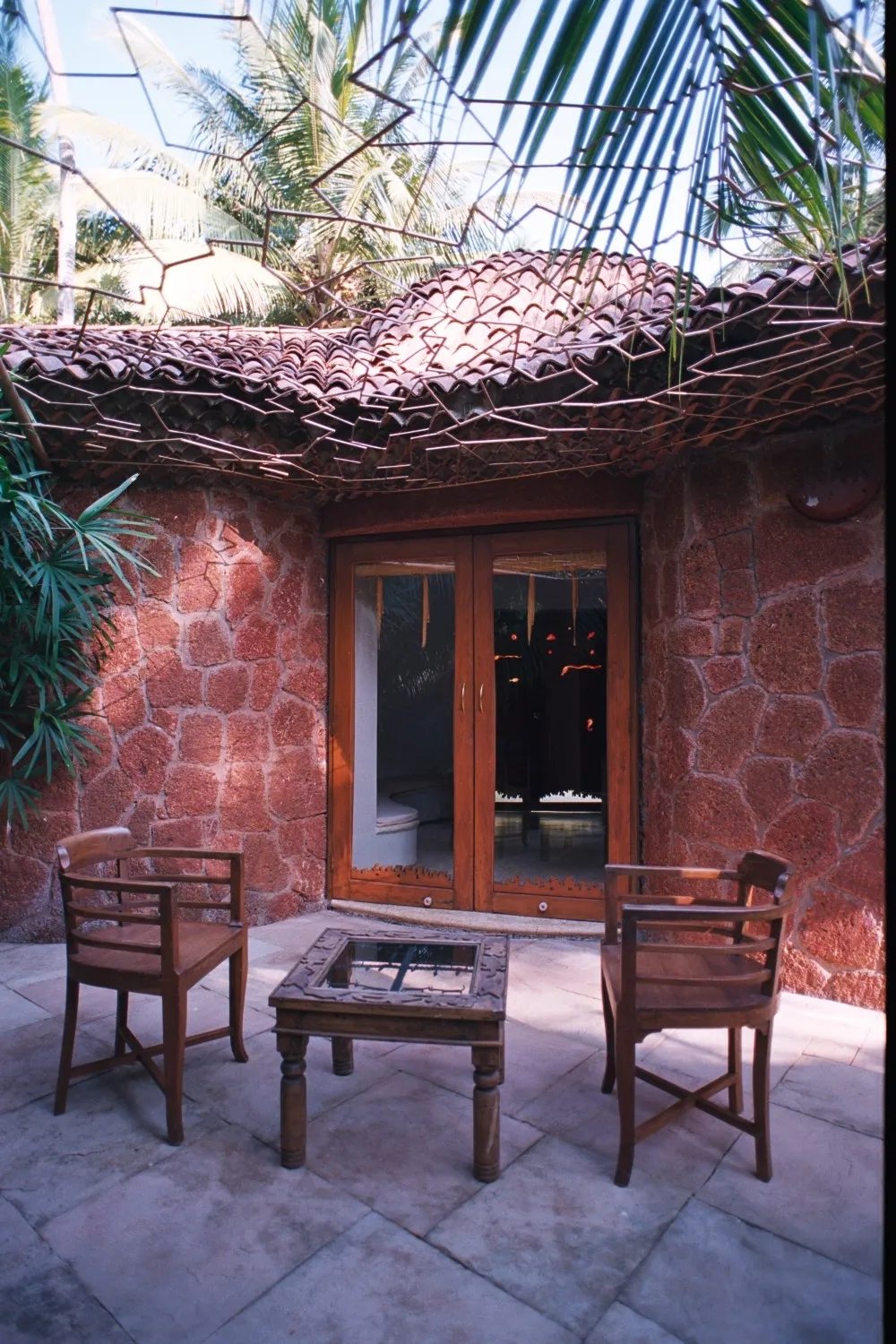
The Sea rooms in their detailing try to capture the feel by the use of shells in its windows, free flowing metal works in its grills and furniture, coral and aquamarine colors with marine plants and aquarine motifs in its interiors and floors which are cast situ with flowing divisional lines. Each of these three rooms represent a depth in the ocean structure of Beach front, Shallow water and Deep sea. The rooms are covered with country tiles that also free flow between the two domes.
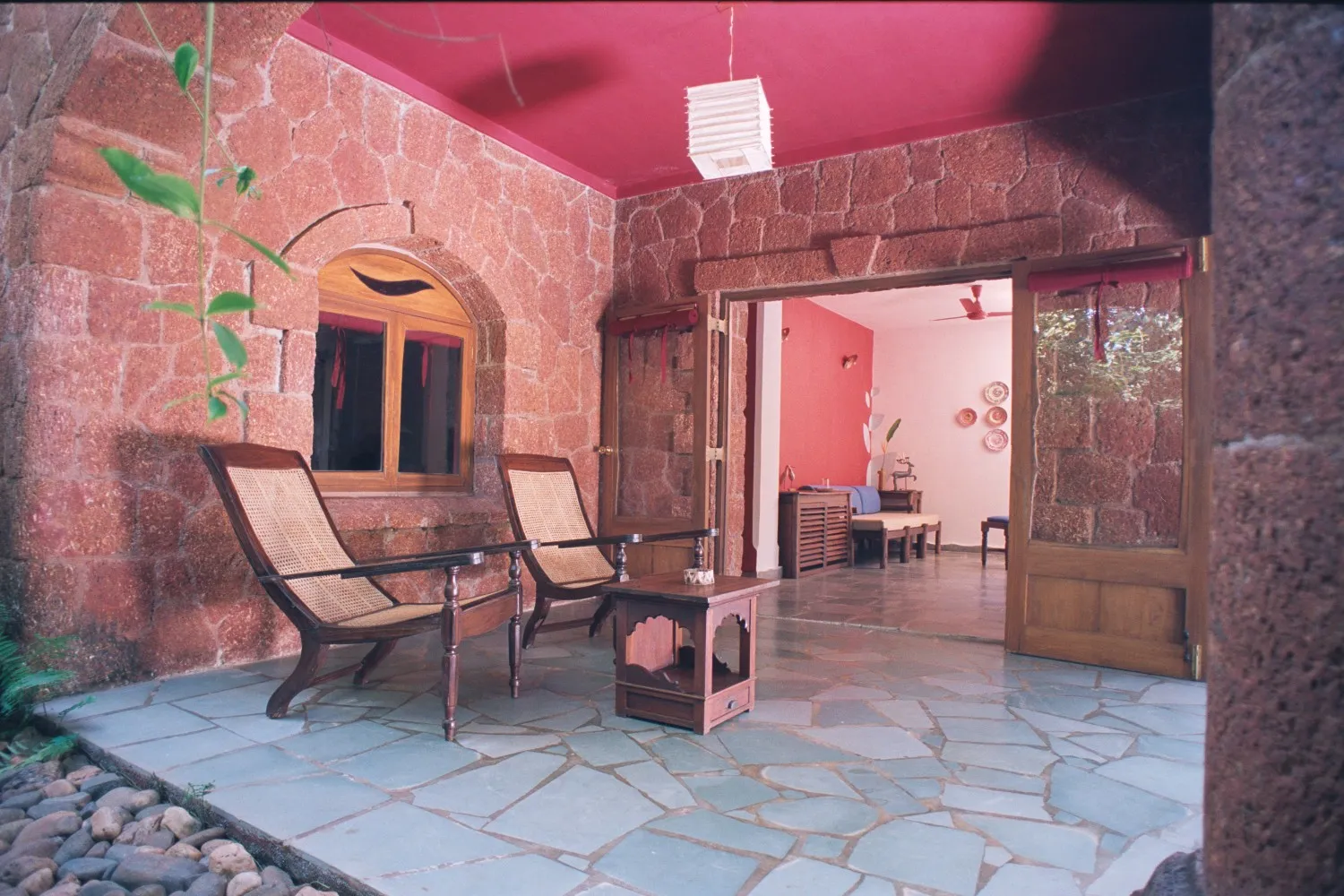
The Field rooms capture the fields by using shades of greens and browns. The furniture is made of cane and the flooring terracotta. Bamboo, grass and palm themes are captured in its grills, windows and other details.
The Hill rooms are at an elevation and are accessed through a series of platforms, starting from the elevated pool deck and waterfall. The rooms capture the theme by using mixed stone for its floor, hard thick wood for its doors, windows and furniture and colours of the elevated sky for its interiors.
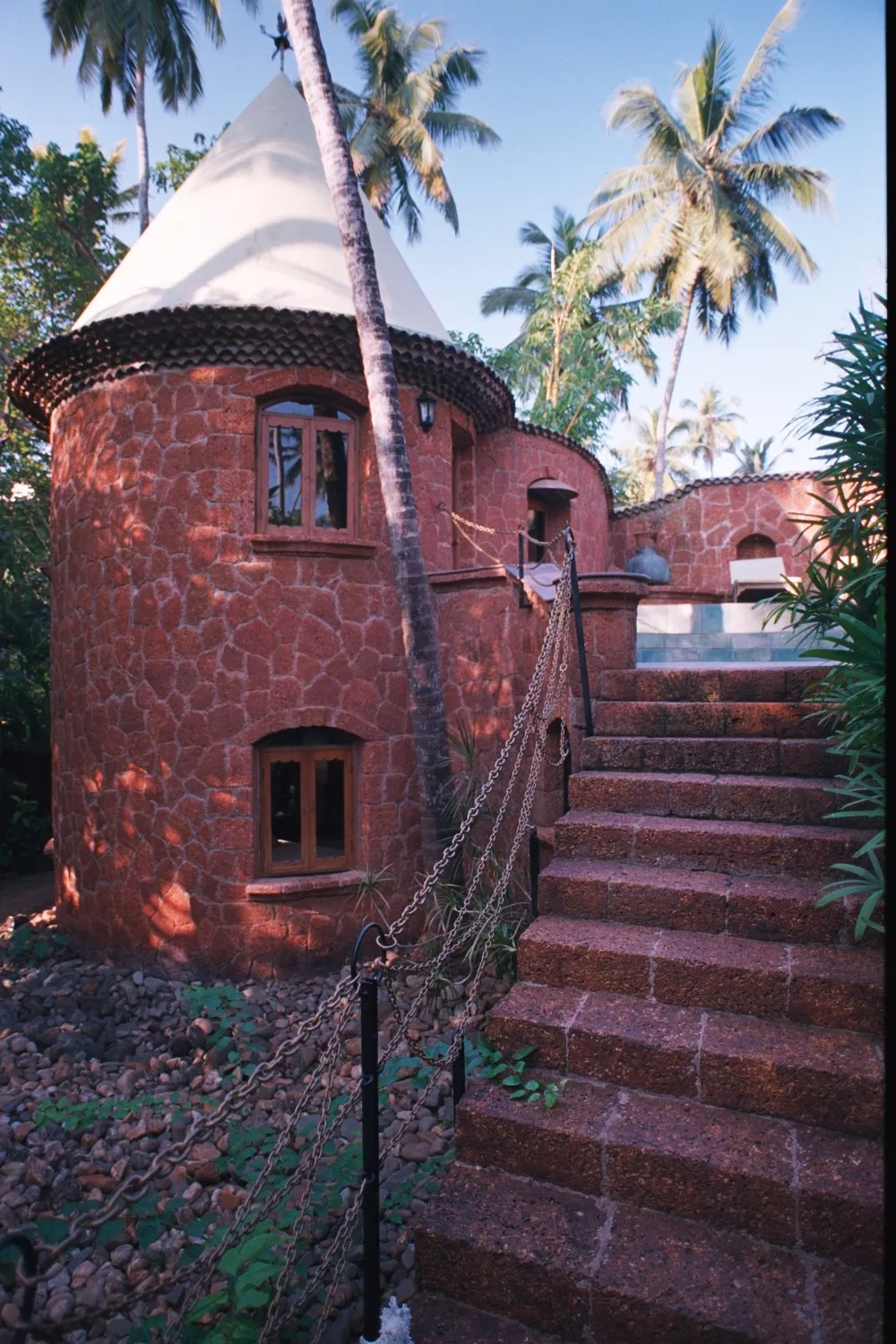
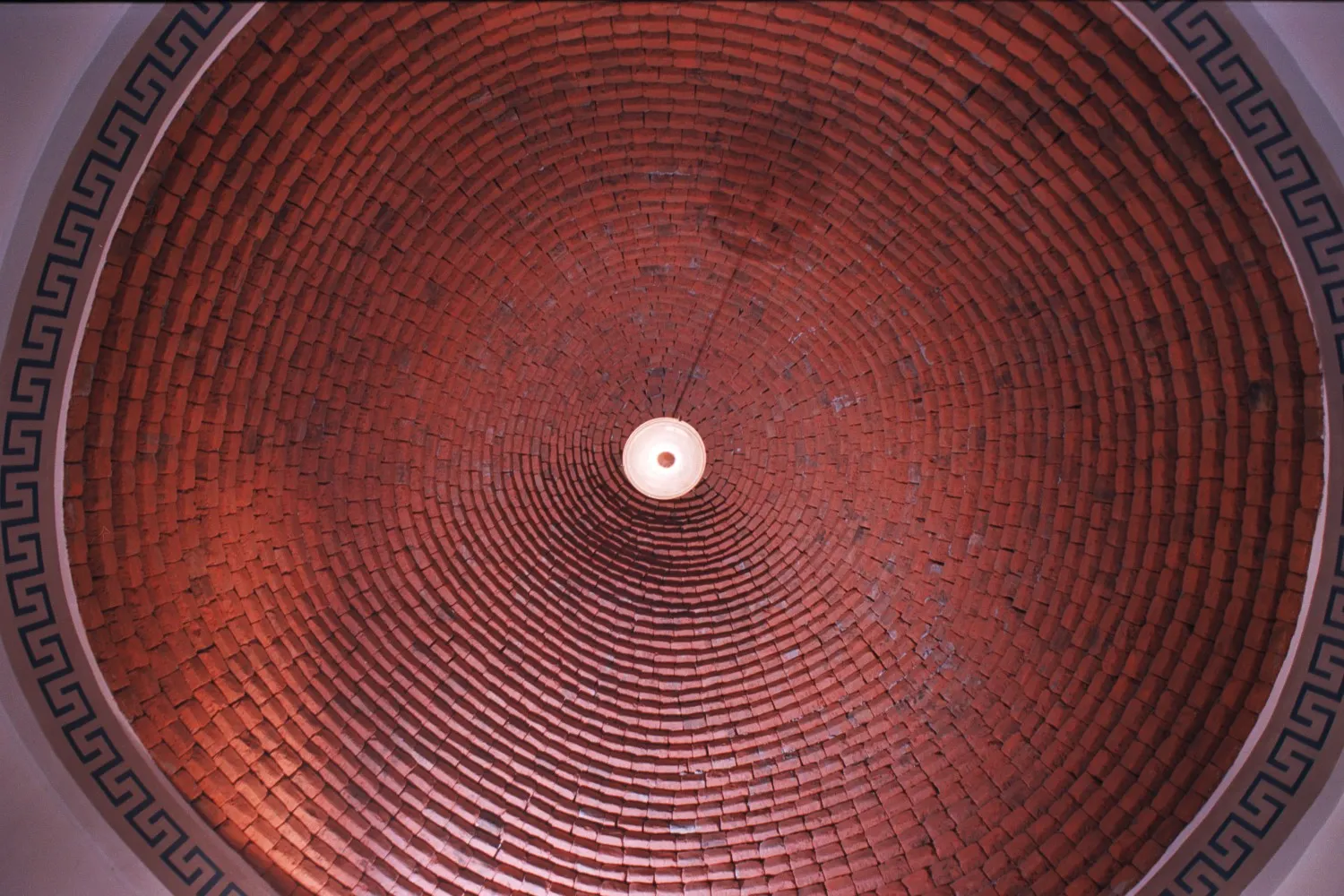
Besides the three main themes is a Castle suite which houses an elevated living and deck which leads downward toward two bedrooms with private gardens. The living room is roofed by a bricked cone and the formality of these rooms is enhanced by traditional Goan furniture.
All the rooms are peripheral to the site and hence have private gardens attached to them in their generous setbacks. The compound walls in these spaces are a backdrop for the lush greenery and also support a garden lighting system and wall plants in niches.
The pool is free form and has features like a pool bar, broad entrance steps off a pavillion, a children’s wading area, a grotto over which is a water fall, a pebbled beach area with a little side stream and has adequate length for the health swimmer. The pool deck is paved with dholpur stone which has a cooling effect when moistened and is also nonslip. All the bathrooms are of china mosiac and are coloured and patterned according to the theme of the room it is attached to and the mosiac also renders a nonslip effect.
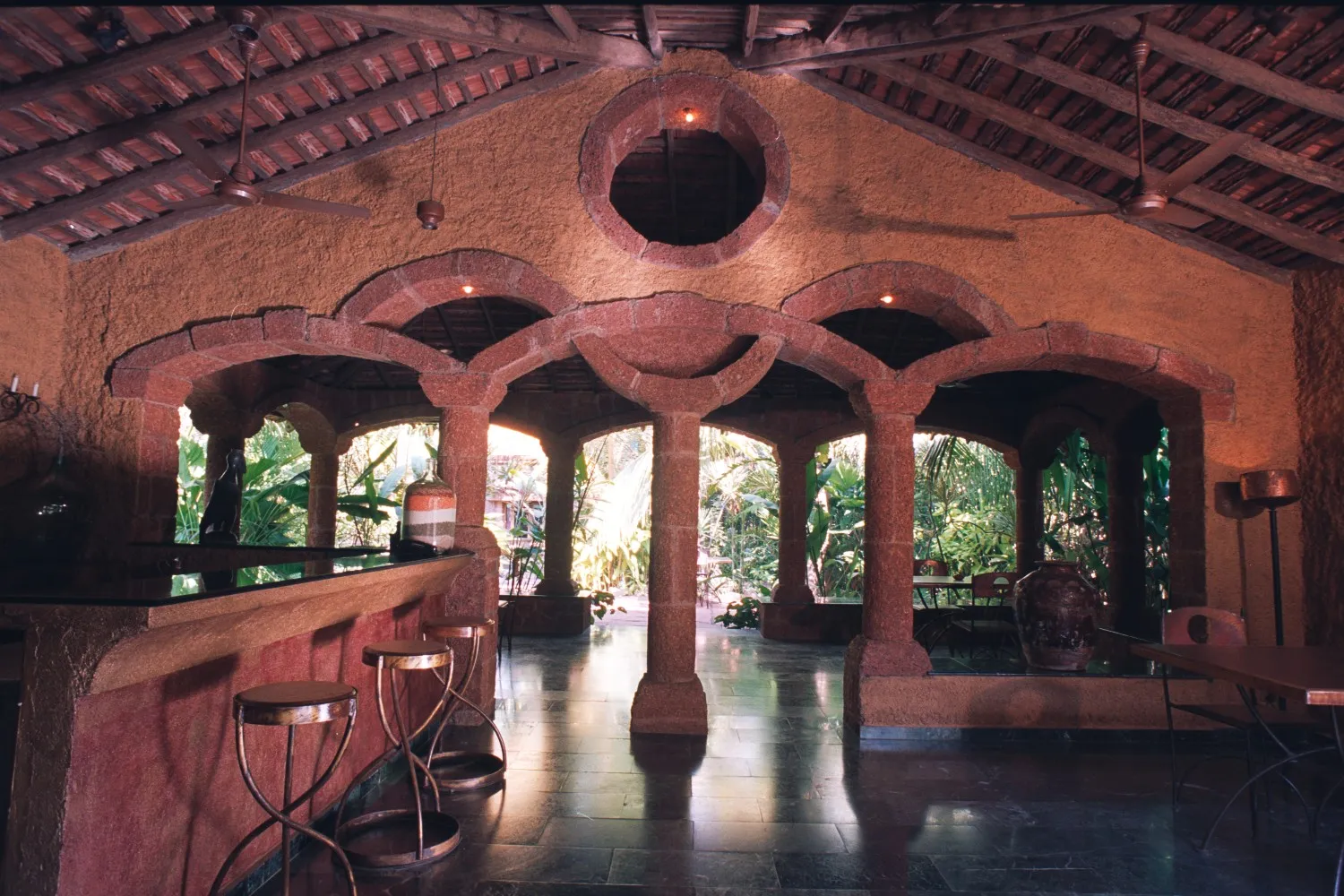
The restaurant block is an open pavillion with an intricate stone colonade and broad benches. It is called the Copper Bowl and the copper theme is reflected in its furniture, lamps, bar details and even its crockery. The floor is of Barodagreen marble that supports the laterite stone and copper theme well. Attached to the far end of the restaurant is a small court that houses a banyan tree and well and acts as a buffer between the service block and restaurant. The service block houses the kitchen, laundry, staff quarters, manager’s room and generator in a building that is linear, verandahed, well lit and ventilated, rare for service blocks in an industry usually inconsiderate about its staff.
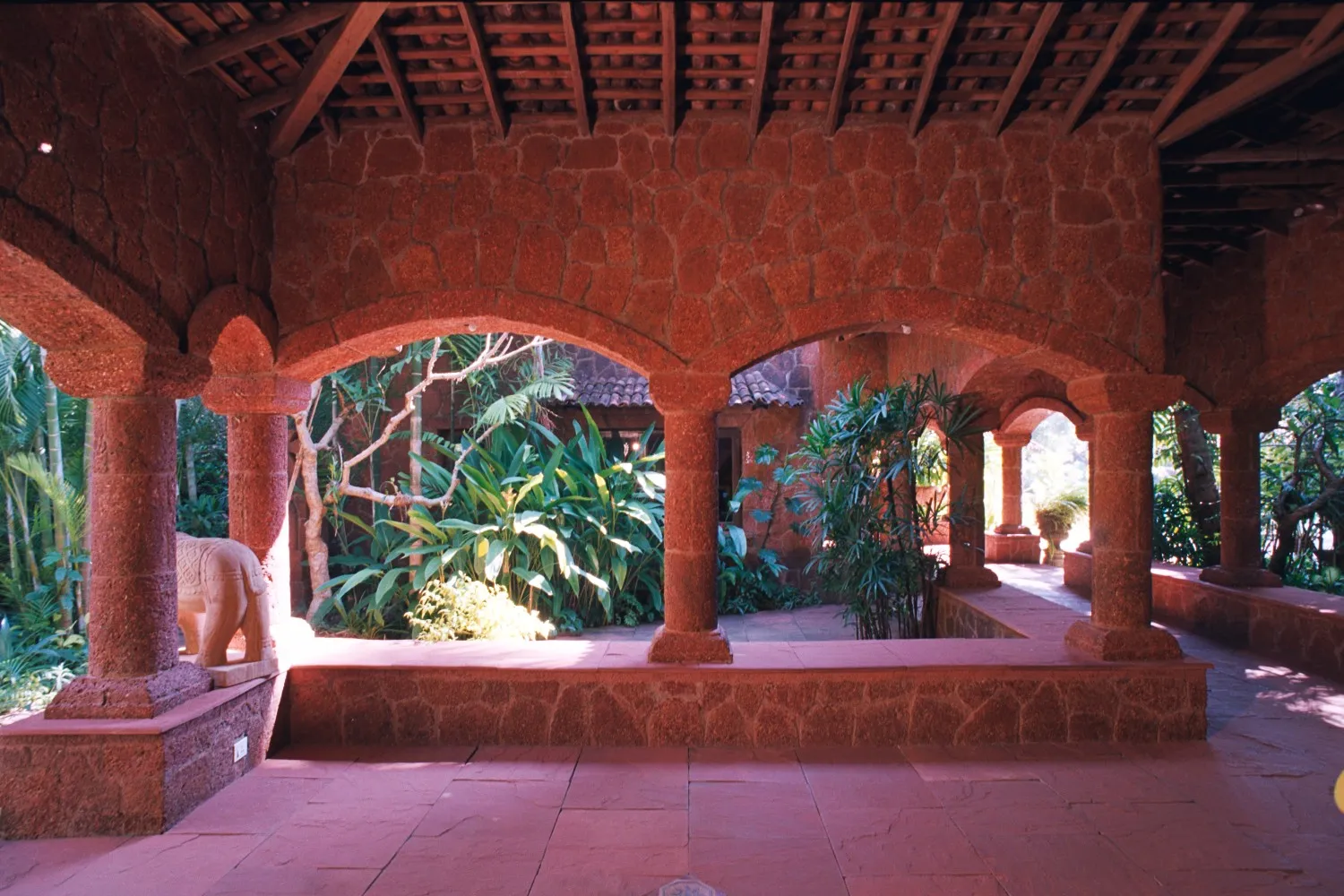
The complex is built of laterite stone, using traditional arches over openings, traditional corbelling methods to create overhangs for the roof and traditional country tiles from old houses which cover a hidden concrete slab thus adding modern practicality with a traditional aesthetic .
The whole complex is dramatically enhanced by the creation of a tropical garden and moving through it evokes a sense of discovery, revealing buildings and open spaces that slowly unfold as one moves through it, where the lush planting of cool colors are offset brilliantly by the warm articulated laterite walls.